
Can you tell me if it is possible to include a runtime (org.kde.Platform) in a.flatpak file so that the.flatpak file can also be installed on a PC that does not have an internet connection in case the runtime is not present on the machine. Basically, that the flatpak can be copied, for example, on a USB stick and installed on any PC even when you don’t have the possibility to connect to the flathub repositories to download the runtime? Of course, I realize that this will make the.flatpak file much larger.
Runtime inside a file .flatpak
No, a .flatpak bundle can only include a single ref.
As an alternative, you can use flatpak create-usb:
Thanks for the clarification. I would also like to know if it is possible to download the flatpaks of the apps and runtimes from flathub? Because I don’t see the possibility from the site and it seems strange to me. In flatpak format obviously.
Unlike with other package formats, .flatpak bundles are not used natively by flatpak. Flathub hosts an ostree repo that flatpak pulls from.
Thanks for the clarification. Honestly I find it a bit of a flaw. Just out of curiosity, does the same thing apply to Canonical’s SNAPs?
Why?
It can also be an OCI instead of ostree Bringing OCI images to the desktop with Flatpak - Open Container Initiative
Sorry for my ignorance, but I’m trying to understand. If I used OCI repo instead of OStree repo, could I create a .flatpak file that also brings the runtime. So that I can distribute the flatpak even on a PC that does not have the ability to access the network to download it?
No, that’s on the repo side of things. That’s why I was confused, why you would even care or identify this as a flaw.
You can as mentioned above, just run create-usb and solve your problem.
I was able to use the flatpak create-usb command with these commands:
flatpak info -o org.tarro.lamiavideoteca
terminal answer: lamiavideoteca1-origin
flatpak remote-modify --collection-id=org.tarro.lamiavideoteca lamiavideoteca1-origin
flatpak create-usb ~/Scrivania/Flatpak/LaMiaVideoteca org.tarro.lamiavideoteca
An empty folder is created but it weighs about 500 Mb,
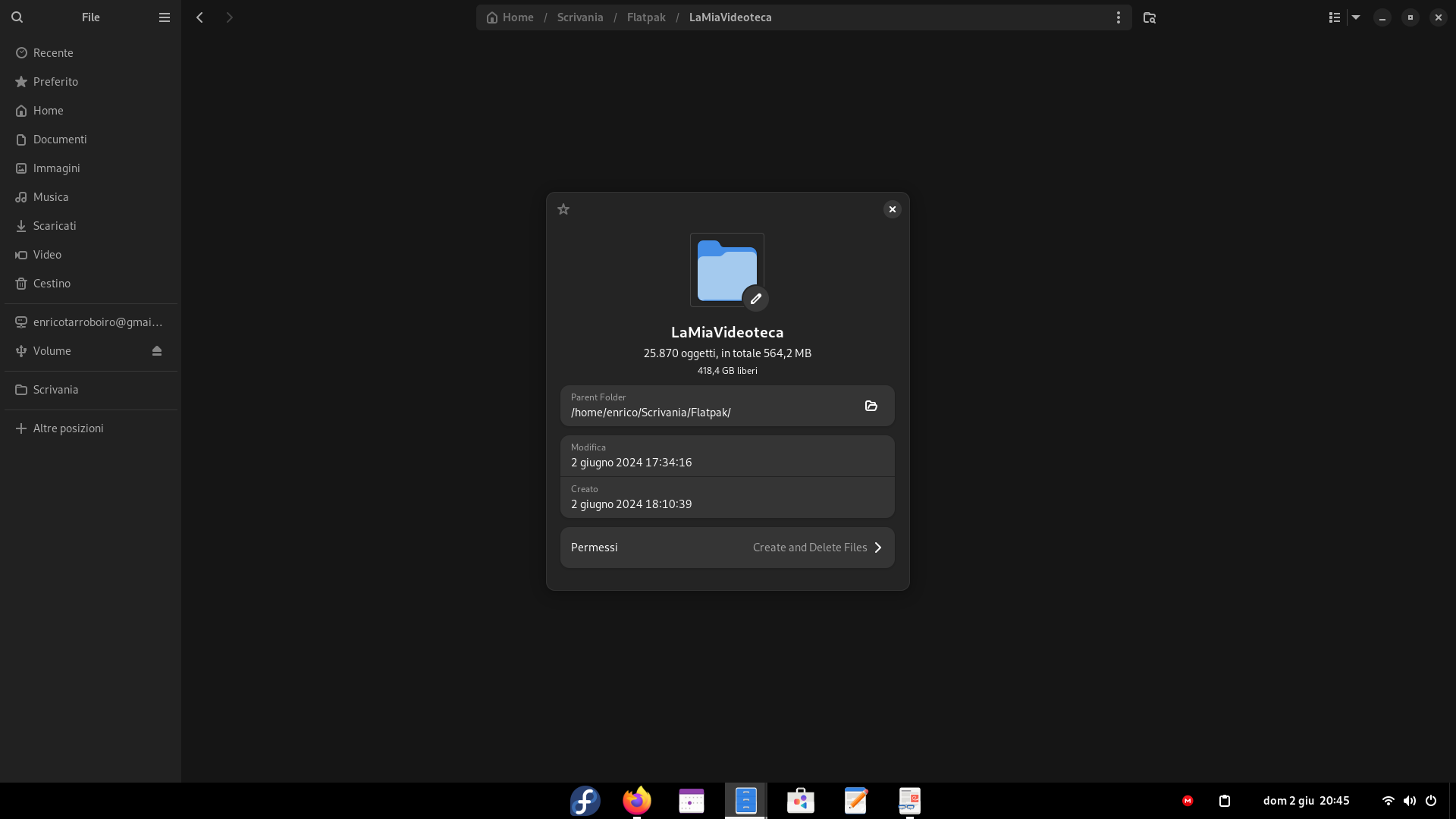
so i try to install it on a virgin PC with these commands:
flatpak remote-add --user lamiavideoteca1-origin '/home/enrico/Scrivania/Flatpak/LaMiaVideoteca' --no-gpg-verify
flatpak remote-modify --collection-id=org.tarro.lamiavideoteca lamiavideoteca1-origin
flatpak install --sideload-repo='/home/enrico/Scrivania/Flatpak/LaMiaVideoteca'
lamiavideoteca1-origin org.tarro.lamiavideoteca
the command works, but unfortunately I note with regret that the PC connects to the network to download the runtime.
razzeee
Sorry I can’t understand? You mean I have to issue the command:
flatpak create-usb ~/Scrivania/Flatpak/LaMiaVideoteca (runtime/org.kde.Platform/x86_64/6.6) after giving the command
flatpak create-usb ~/Scrivania/Flatpak/LaMiaVideoteca org.tarro.lamiavideoteca?
To include it?
Sorry I thought it was possible to install everything in one package (folder in this case), but I guess you can just make a flatpak create-usb for one app/runtime at a time. flatpak create-usb ~/Scrivania/Flatpak/Runtime org.kde.Platform/x86_64/6.6 give me this error:
(flatpak create-usb:12250): OSTree-CRITICAL **: 21:25:12.067: ostree_collection_ref_new: assertion 'collection_id == NULL || ostree_validate_collection_id (collection_id, NULL)' failed
Errore di segmentazione (core dump creato)
What does it mean?
It should never core dump. That’s something, you should probably report to the flatpak issue tracker.
I changed distribution and tried again (Kubuntu 24.04). I managed to ‘extract’ the runtime using the same command that was giving me the error. Maybe it was just a ‘collection_id’ problem. The file that is generated inside the folder is not visible (.ostree) which is why I couldn’t see it (it was a trivial thing).